Customer Portal






Switch Now
to the smart way to plug and inject

 Sales & Service Contact
Your local contact in
Technical customer service
+43 50 620 3333
service.ea@engel.at
Spare parts sales
+43 50 620 3333
service.ea@engel.at
Support Hotline 24/7
+43 50 620 3333
Fees for the ENGEL hotline vary depending on the country. Details

In injection moulding, stability remains one of the most critical pursuits for any manufacturer.
However, real-world production environments are far from ideal. Temperature fluctuations, variations between raw material batches, thermal expansion of the mould, and wear from prolonged machine operation... these factors continuously introduce disturbances, making it difficult to keep parameters like pressure and position within their optimal set window. The consequences are tangible: flash (burrs), short shots, burn marks, material leakage, dimensional deviations, and in severe cases, unexpected production downtime.
True stability is not static. It cannot be achieved by simply locking in the settings from commissioning. It is dynamic — a machine that senses, evaluates, and corrects itself, continuously.
This is precisely the challenge that WINTEC's full closed-loop control aims to address.
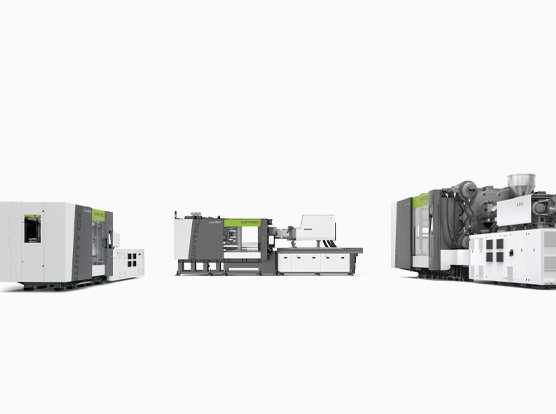
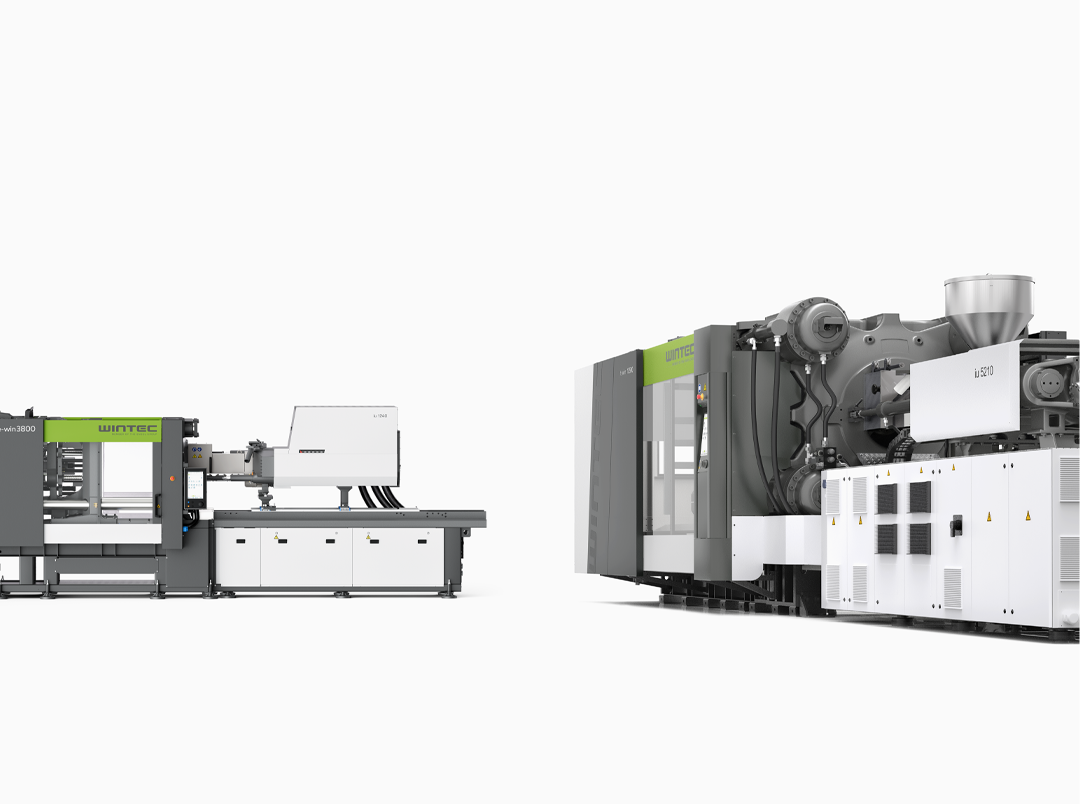
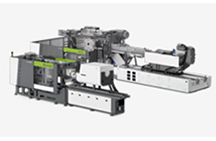
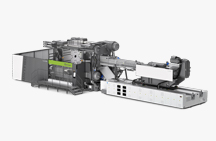
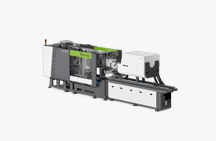
As a member of the ENGEL Group, WINTEC equips its injection moulding machines — the t-win hydraulic two-platen machine and the e-win all-electric machine — with high-precision sensors. These sensors provide real-time monitoring of every phase of the injection process, feeding data back to the control system to enable dynamic parameter optimisation, thereby guaranteeing high-precision repeatability and process stability throughout the entire production cycle.
WINTEC's full closed-loop control can be distilled into a four-step cycle: input, detection, feedback, and adjustment. The machine doesn't merely execute commands; it continuously "reviews" its own execution results, compares them against the set values, and corrects any deviation it detects. This article will break down WINTEC's four core closed loops—clamping force, mould height, injection, and nozzle contact force & carriage movement—exploring how "full closed-loop control" translates into lower scrap rates on your production line and ultimately enhances your return on investment.
Stability is never about being "static"; it is about "dynamic adherence".
Clamping force is often the parameter in injection moulding that is "set and forgotten," yet it is one of the most critical variables affecting process stability and part quality.
During continuous operation, changes in ambient conditions and machine behaviour can cause the actual clamping force to drift above or below its target value. If the clamping force is too low, the mould cavity is slightly forced open ("mould breathing") under injection pressure, causing molten material to escape from the parting line and form flash. Conversely, if the clamping force is too high, it can lead to issues such as burn marks, accelerated mould wear, and unnecessary energy consumption.
WINTEC's approach involves integrating high-precision sensors into the clamping unit. These sensors monitor the deformation of the mould platens in real-time, converting it into an actual clamping force value and feeding it back to the control system. Whenever the detected value deviates from the setpoint, the control system intervenes instantly—cycle by cycle: reducing the force when it is too high and increasing it when it is too low, ensuring that the clamping force for every single cycle remains within the defined tolerance window.
Value to your production: no longer need to rely on experienced operators to manually fine-tune the clamping force, nor will you experience quality fluctuations due to shift changes or batch variations.
Mould height is another critical variable in the clamping unit. Once the mould height has been set, the moving platen should reach the target position accurately. However, as production progresses, factors like manufacturing precision, distance, and mechanical tolerance can cause minor shifts in this position.
WINTEC incorporates an transducer in the clamping unit to detect the real-time mould height position. Once the position reported by the transducer deviates from the set value, the control system immediately readjusts the mould height back to the required specification, ultimately ensuring a stable production process.
The operator can clearly view the current mould height value on the WINTEC control panel, while the sensor continuously monitors the positional changes, with a precision of up to 0.01 mm. Any deviation triggers automatic correction. This dual guarantee of "transparent monitoring + automatic self-correcting" is something that open-loop and semi-closed-loop systems cannot provide.
The stability of injection pressure and speed has a direct impact on part weight, dimensions, and surface quality.
The WINTEC injection unit is equipped with high-precision sensors that monitor injection pressure in real-time. After setting the desired injection pressure, if the actual pressure drifts higher or lower due to changes in melt viscosity, non-return valve wear, or other factors, the sensor transmits the deviation signal back to the control system. The control system responds immediately, adjusting the pressure back to the set value.
The underlying principle is identical to that of closed loop clamping force control, but it operates on a more intricate process level. It helps maintain a highly repeatable shot volume and pressure profile from one cycle to the next — supporting consistent part weight, dimensions and appearance.
Among the four closed loops, this last loop is the most easily overlooked, yet its failure carries the highest cost.
A deviation in the carriage position or nozzle contact force can directly lead to melt leakage between the nozzle and the mould sprue bush. This leakage not only wastes raw material but also creates solidified layers on the mould surface, affecting part appearance. In severe cases, it necessitates a production stop for cleaning—an impact that far outweighs the cost of a single defective part in mass production.
Nozzle Contact Force Sensor:
The compression of a spring mechanism is detected by a sensor, which measures the distance between the injection unit and the platen. This is converted into an actual nozzle contact force value and fed back to the control system, enabling closed-loop control of whether the actual nozzle contact force matches the set value.
Carriage Movement Transducer:
This transducer tells the controller in real-time whether the current carriage position matches the set value.
If either signal indicates a deviation, the controller makes immediate adjustments to bring both the carriage position and the nozzle contact force back to their set points.
For the e-win all-electric machine, WINTEC also offers an adjustable all-electric nozzle contact force system, specifically designed for cleanroom applications, enhancing energy efficiency while ensuring high performance and sustainability.
For industries demanding high cleanliness and continuity, such as medical, electronics, optics, and food packaging, closed-loop control of nozzle contact force and carriage movement is not a "nice-to-have" but an "essential baseline."
Many defects share similar appearances, but their root causes can differ. Often, they result from multiple unoptimised factors. WINTEC's advantage lies in the fact that all four closed loops operate synergistically under the same C3 control system, allowing for comprehensive troubleshooting of all potential sources of problems and significantly reducing the likelihood of defects:
| Closed-Loop Dimension | Core Sensor(s) | Main Problems or Defects Prevented |
| Full Closed-Loop Control of Clamping Force | Platen Deformation Sensor | Flash, Short Shots, Burn Marks |
| Full Closed-Loop Control of Mould Height | Transducer | Flash, Short Shots, Burn Marks, Insert Displacement, etc. |
| Full Closed-Loop Control of Injection | Pressure Sensor | Part Weight/Dimension Variation, Short Shots, Flash, etc. |
| Full Closed-Loop Control of Nozzle Contact Force and Carriage Movement | Nozzle Contact Force Sensor + Carriage Movement Transducer | Material Leakage, Downtime |
Data collected from these four closed loops converges in the C3 control system for dynamic parameter optimisation. This is why Weihai Ruimu Precision, after deploying over 20 WINTEC t-win machines, achieved a repeatability accuracy of less than 0.1% for high-precision parts, a 15% increase in efficiency, and over 20% reduction in energy consumption compared to previously used equipment Dong De, Technical Director of Ruimu, commented on WINTEC's full closed-loop control: "WINTEC injection moulding machines really achieved full closed-loop control. Every parameter—speed, pressure, position, etc.—is monitored in real-time by high-precision sensors, enabling seamless human-machine collaboration."
If you are evaluating injection moulding equipment, consider assessing WINTEC's full closed-loop control against the following dimensions:
Quality Dimension
Significant reduction in defects like flash, short shots, and burn marks.
Part weight repeatability accuracy can reach 0.1% (as verified in the Ruimu customer case
Efficiency Dimension
Eliminates the need for repeated manual parameter adjustments; no quality fluctuations due to shift or material changes.
Ruimu customer case study shows a 15% improvement in efficiency.
Cost Dimension
Over 20% reduction in energy consumption compared to Chinese alternatives (Ruimu case study).
Reduced mould wear, leading to lower maintenance costs.
Less raw material waste due to lower defect rates.
Stability Dimension
Core components like platens and tie bars have undergone 3 million cycles at maximum clamping force; zero field failures of core components recorded in customer factories to date
Ruimu's first WINTEC machine, installed in 2018, still performs like new.
Competition in injection moulding ultimately comes down to a competition in "stability." When your customers demand delivery within 1-3 days, require defect rates below a specific ppm value, and expect every batch to match the first article, "the machine can run" and "the machine can remain stable" represent two entirely different levels of capability.
WINTEC's full closed-loop control transforms "stability" from a slogan into four verifiable technical loops—Clamping Force, Mould Height, Injection, and Nozzle Contact Force & Carriage Movement. Each loop is monitored by sensors, corrected by the control system, and documented by data. This is not just a reflection of technology; it is a solemn commitment to your production continuity and return on investment.
Whether you are in automotive & transportation, packaging, electronics, medical technology, or technical moulding, WINTEC's t-win (4,500–40,000 kN hydraulic two-platen machine) or e-win (1,000–5,000 kN all-electric machine) series, combined with ENGEL's over 80 years of proven industry application experience, can provide focused injection moulding solutions to meet your needs.
If you wish to explore in depth how WINTEC's full closed-loop control can be adapted to your specific process conditions, please consult our industry application experts. Our technical team will work with your product structure, material characteristics, and production cycle to provide a complete solution ranging from machine selection and closed-loop parameter configuration to long-term service.